Applications & Partnerships: From technology platforms to real-world systems and long-term cooperation
The company’s technological solutions are designed as universal engineering platforms capable of adapting to diverse infrastructure scenarios and customer requirements. Our focus is not on standalone devices, but on systems that can be integrated into complex environments, scaled, and evolved throughout their entire lifecycle.
This approach allows the same technological foundations to be applied across various industries by adapting configurations, software modules, and integration architectures to meet specific tasks.
Application Domains
Industrial Automation and Process Control
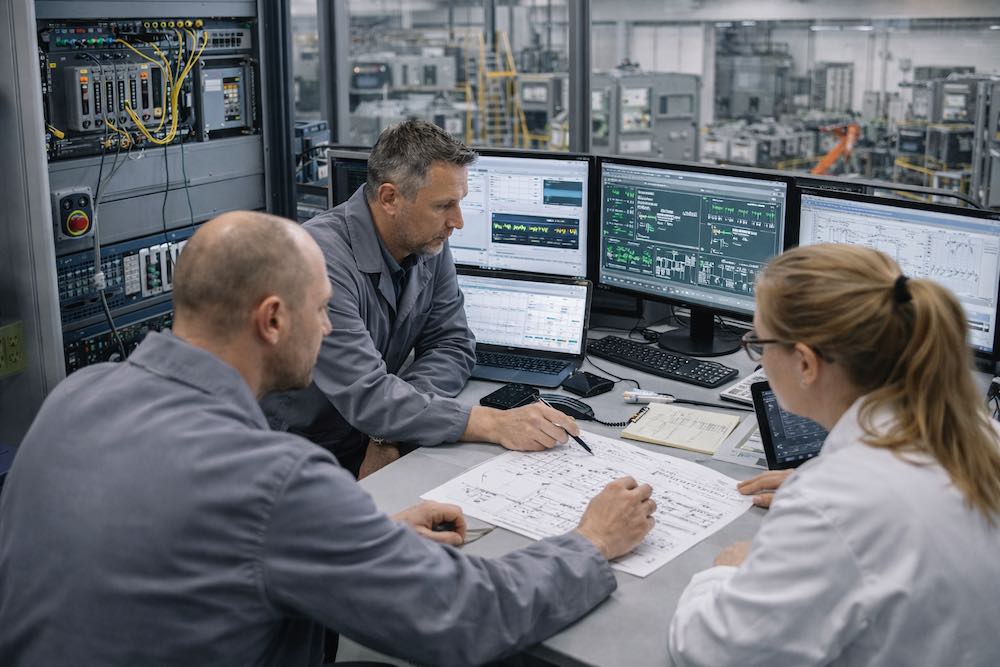
In industrial environments, operational stability, predictable equipment behavior, and the ability to function alongside powerful sources of electromagnetic interference are paramount. Systems are utilized for data collection from distributed nodes, telemetry transmission, process synchronization, and centralized equipment control. Particular attention is paid to electromagnetic compatibility (EMC), thermal regimes, and the reliability of communication channels under constant load. Solutions integrate into existing industrial management platforms and can be deployed in stages without halting production processes.
Critical Infrastructure Systems
For infrastructure facilities, continuity of operation and the ability to perform controlled modernizations without disrupting core functions are critical. Technological platforms are used in monitoring systems, management of distributed nodes, and network status data collection. The architecture is built with redundancy, local autonomy, and the capability for post-recovery synchronization, ensuring system viability even during partial failures or network constraints.
Transport and Logistics Environments
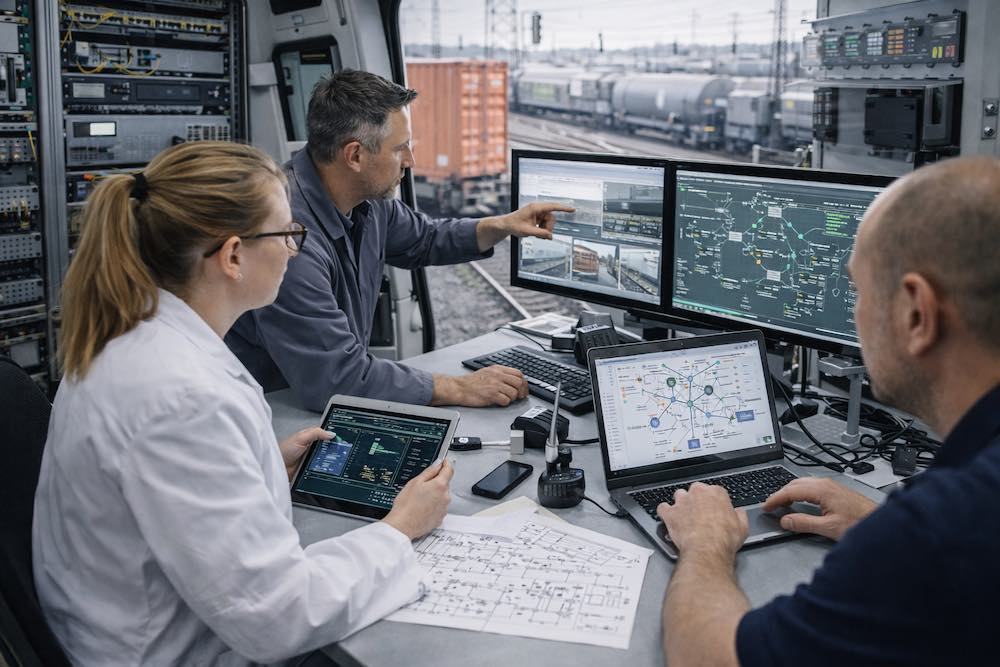
Transport and logistics systems demand dynamic operational scenarios, variable network topologies, and synchronization between mobile and stationary nodes. Solutions are applied to facilitate data transfer between infrastructure objects, dispatch centers, and vehicles, ensuring stable information exchange and centralized process management. Systems are designed to handle latencies, connectivity interruptions, and the need for rapid recovery following environmental changes.
Telecommunications and Network Infrastructure
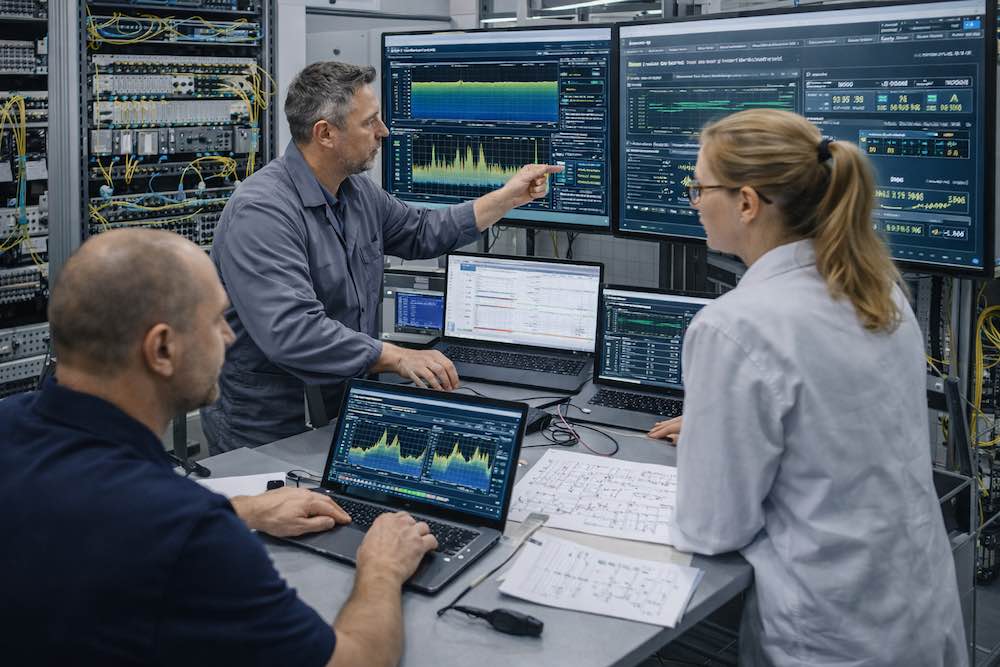
For telecommunication networks, the key parameters are throughput, quality of service (QoS), and the ability to scale without a total infrastructure overhaul. Technological platforms are used to monitor channel parameters, manage network nodes, and integrate with the operator’s digital systems. Spectral analytics algorithms and digital management platforms optimize resource utilization and maintain stable network operation under shifting loads.
Monitoring and Control Systems
Monitoring and control systems combine hardware measurement modules with software data analysis platforms. Solutions are used to collect environmental parameters, technical status of equipment, and network characteristics, subsequently transmitting data to processing centers. High measurement accuracy, inter-node synchronization, and interference immunity allow these systems to be used in challenging infrastructure conditions with minimal data loss.
Co-development and Partnership Models
The company operates as an engineering partner in projects requiring deep technology integration, joint architecture design, and long-term product evolution. Collaboration formats include contract R&D programs, joint design of hardware and software platforms, adaptation of existing technologies to specific customer requirements, and the transfer of developments to contract manufacturing. Joint projects are structured with future certification, manufacturing scalability, and operational support in mind, avoiding gaps between development, production, and implementation stages.
Technology Transfer and Manufacturing Partnerships
A dedicated stream of our activity involves the transfer of technology platforms to contract manufacturing or a partner’s local production chains. This process includes adapting designs to specific manufacturing workflows, preparing full technical documentation packages, training the manufacturer’s engineering teams, and overseeing pilot production runs. This format enables partners to rapidly launch serial products at their own facilities while maintaining control over quality and regulatory compliance.
Long-term Cooperation and System Evolution
Partnership extends beyond the delivery of a finished product or technology. Most projects are oriented toward the long-term evolution of systems, where technological platforms are gradually expanded and modernized alongside the customer’s needs. The system architecture allows for the addition of new functional modules, algorithm updates, and the integration of additional nodes without a total infrastructure rebuild. This approach forms the basis for stable, multi-year cooperation programs where system development occurs in a controlled manner with predictable technical and financial parameters.