
Systems & Operations: From deployment to long-term stable operation
Radio-electronic solutions for infrastructure environments do not end at the manufacturing stage. True complexity begins when dozens or hundreds of nodes must function as a unified system, remaining manageable, scalable, and stable throughout years of operation.
This is why integration, digital management platforms, and the service model are treated as a single engineering circuit rather than isolated post-development phases.
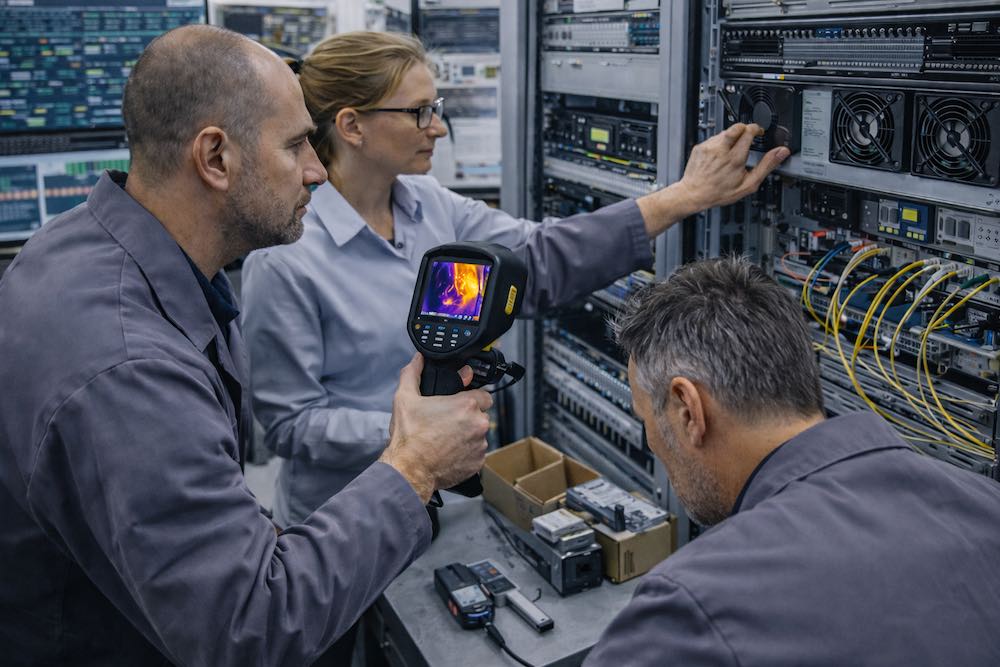
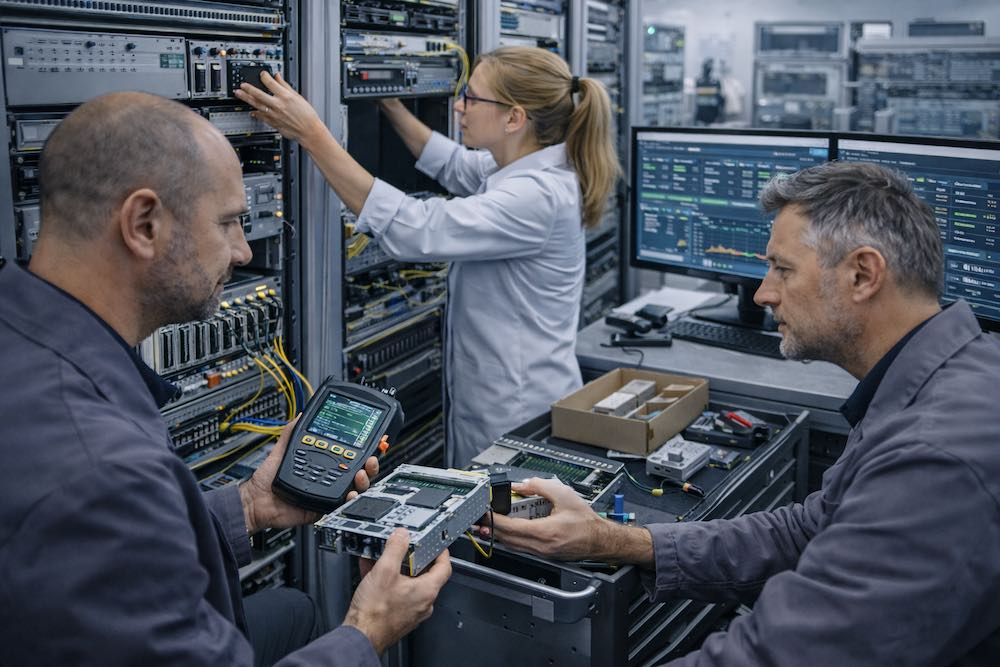
System Integration & Deployment
System integration starts long before the physical placement of equipment. Network architecture, redundancy scenarios, and inter-node interaction logic are embedded during the system design stage to ensure that subsequent deployment does not require an overhaul of the entire infrastructure.
Deployment is carried out in phases—from individual nodes to the full system—with verification of real-world data flows, inter-component synchronization, and behavior under peak loads. This approach enables the identification of integration issues before the system transitions into permanent operation.
Particular emphasis is placed on integration with the customer’s existing IT and engineering systems. Interaction platforms and protocols are designed to minimize the need for specialized adapters, utilizing standard data exchange interfaces instead. This allows for gradual system expansion—adding new nodes, altering network topology, or updating the functionality of individual modules without shutting down the entire infrastructure.
Digital Platforms for Distributed Systems
Modern radio-electronic complexes function as part of a digital environment for management, monitoring, and analytics. The software infrastructure provides centralized control over a large number of distributed devices, allowing the operator to interact with the system as a single organism.
Digital platforms encompass hardware configuration management, telemetry collection, module health diagnostics, and link parameter analytics. This enables more than just real-time observation; it allows for the analysis of component degradation trends and changing environmental conditions.
The system is specifically designed to operate within unstable or limited network infrastructures. Certain functions can be executed locally at edge nodes, with subsequent synchronization to central services once connectivity is restored. This approach enhances the system’s resilience against partial network failures. Integration with external information systems is implemented via standard APIs and streaming event protocols, allowing radio-electronic complexes to be incorporated into broader infrastructure management, dispatch, or analytics platforms.
Lifecycle Support & Long-Term Operations
For infrastructure systems, commissioning is merely the beginning of the lifecycle. The primary challenges involve long-term stability, incremental updates, and adaptation to evolving customer requirements.
The service model is built around continuous monitoring of both hardware and software environments. Telemetry is used for the early detection of component anomalies, enabling a transition from reactive troubleshooting to planned preventative maintenance.
Software and configuration updates are performed in a controlled manner, with support for staged deployment and rollbacks if issues are detected. This allows for the addition of new features or the improvement of algorithms without halting the system and without requiring physical access to each node.
Furthermore, we support the integration of new modules into already operating infrastructure. The system architecture allows for growth in functionality and scale without requiring the total replacement of equipment or the redesign of the network environment. This approach ensures the controlled evolution of the system throughout its lifecycle, allowing customers to plan modernizations without sharp spikes in costs or technical risks.
Operational Stability as a Design Principle
Integration, digital platforms, and service are not treated as “add-ons” after product development. They are part of the architecture from the outset, influencing decisions at the hardware module, network interface, and software logic levels.
This philosophy results in systems that do not merely meet technical requirements in a laboratory but demonstrate predictable behavior in real-world infrastructure environments over the long term. For partners and customers, this translates to reduced operational risks, simplified maintenance, and the ability to scale without losing system controllability.